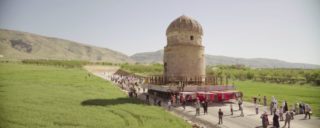
Hasankeyf, ville antique et site archéologique riche de plus de 12’000 ans d’Histoire nichée dans la vallée du Tigre, dans la partie Kurde de la Turquie, est vouée à disparaître sous un lac artificiel, pour permettre la construction d’un barrage hydroélectrique. Avec ce premier long métrage d’une beauté et d’une maîtrise remarquables, il ne s’agit pas pour Rûken Tekes d’expliquer les enjeux de ce futur anéantissement, mais de créer un espace dans lequel l’esprit du lieu peut se manifester. Un espace qui transcende les époques et laisse entrevoir les cycles naturels de création, de destruction et de renaissance qui sont au cœur du film. Elle choisit donc une approche sensorielle et méditative, centrée sur les éléments naturels – l’eau, la terre, l’air et le feu – afin de saisir quelque chose d’une connexion primordiale avec ce territoire et tout ce qui y vit, que ce soit un homme, un mouton, une fourmi, ou une rivière. Un geste cinématographique qui au lieu de l’inventaire attendu des trésors prêts à être engloutis, cherche plutôt à révéler la nature mystérieuse et intemporelle d’un site unique au monde.
Céline Guénot
Hasankeyf, an antique city and archaeological site with over 12,000 years of rich history nestling in the valley of the Tigris River, in the Kurdish part of Turkey, is doomed to disappear beneath an artificial lake, in order to allow for the construction of a hydroelectric dam. With this first feature film showing remarkable beauty and command, Rûken Tekes does not seek to explain the stakes of this future annihilation but creates a space in which the spirit of the place can express itself. A space that transcends time and reveals the natural cycles of creation, destruction and rebirth at the heart of the film. She thus chooses a sensorial and meditative approach, focused on the natural elements—water, earth, air and fire—in order to capture something of a primordial connection with this territory and everything that lives in it, be it a man, a sheep, an ant or a river. A cinematographical gesture which, instead of making the expected inventory of the treasures ready to be swallowed up, seeks to reveal the mysterious and timeless nature of a site unique in the world.
Céline Guénot
Hasankeyf, eine Stadt der Antike und archäologischer Fundstätte mit mehreren tausend Jahren Geschichte, liegt im Tigris-Tal im kurdischen Teil der Türkei. Sie soll im Zuge des Baus eines Staudamms in den Fluten eines künstlichen Sees untergehen. Mit diesem bemerkenswert schönen und ausgereiften ersten Langfilm beabsichtigt Rûken Tekeş nicht etwa, die mit dieser bevorstehenden Vernichtung verbundenen Folgen zu zeigen, sondern vielmehr die Schaffung eines Raums, in dem sich das Wesen dieses Ortes offenbaren kann. Ein die Epochen transzendierender Raum, der einen Blick auf die natürlichen Zyklen von Entstehung, Zerstörung und Wiedergeburt gewährt. Um etwas von dem zu erfassen, was die fundamentale Verbindung zu diesem Gebiet und allem, was hier lebt – sei es ein Mensch, ein Schaf, eine Ameise, ein Fluss – ausmacht, wählt sie eine sensorische, meditative, auf die natürlichen Elemente Wasser, Erde, Luft und Feuer konzentrierte Betrachtungsweise. An Stelle der erwarteten filmischen Bestandsaufnahme der dem Untergang geweihten Schätze findet eine Enthüllung der geheimnisvollen, zeitlosen Natur eines auf der Welt einzigartigen Ortes statt.
Céline Guénot
Rûken Tekeş
Billur Arikan
Gabriele Oricchio